Overview
GSS develops and markets software that is intended primarily for modelling potential field (gravity and magnetic ) data. The exception is our EM-Q product, which uses moments of the impulse response to interpret transient electromagnetic (TEM) data.
Commercial potential field software
The following lists highlight the differences between the Potent and PotentQ products. Follow the links for details of each application.
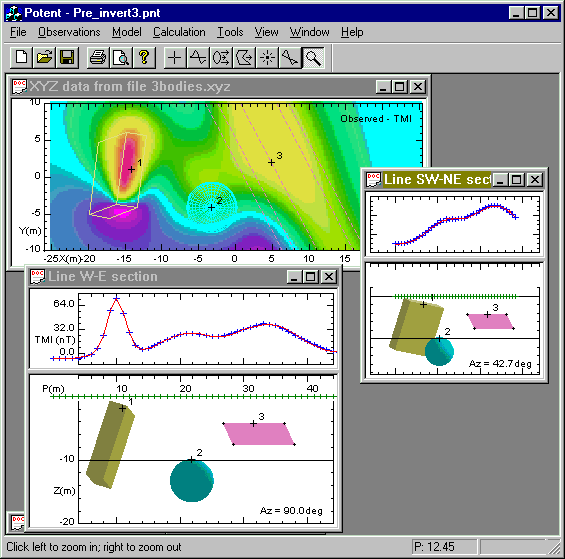
Potent provides versatile "heavy duty" modelling capability. Features include:
- Fully three dimensional
- Multiple datasets, including down-hole data
- Multiple magnetic and gravity field components
- Unlimited model complexity
- Inversion modelling
- Real-time forward modelling
- Unlimited cross-section and plan views
- Represent data as profiles and images
- Interfaces to Intrepid and Oasis montaj
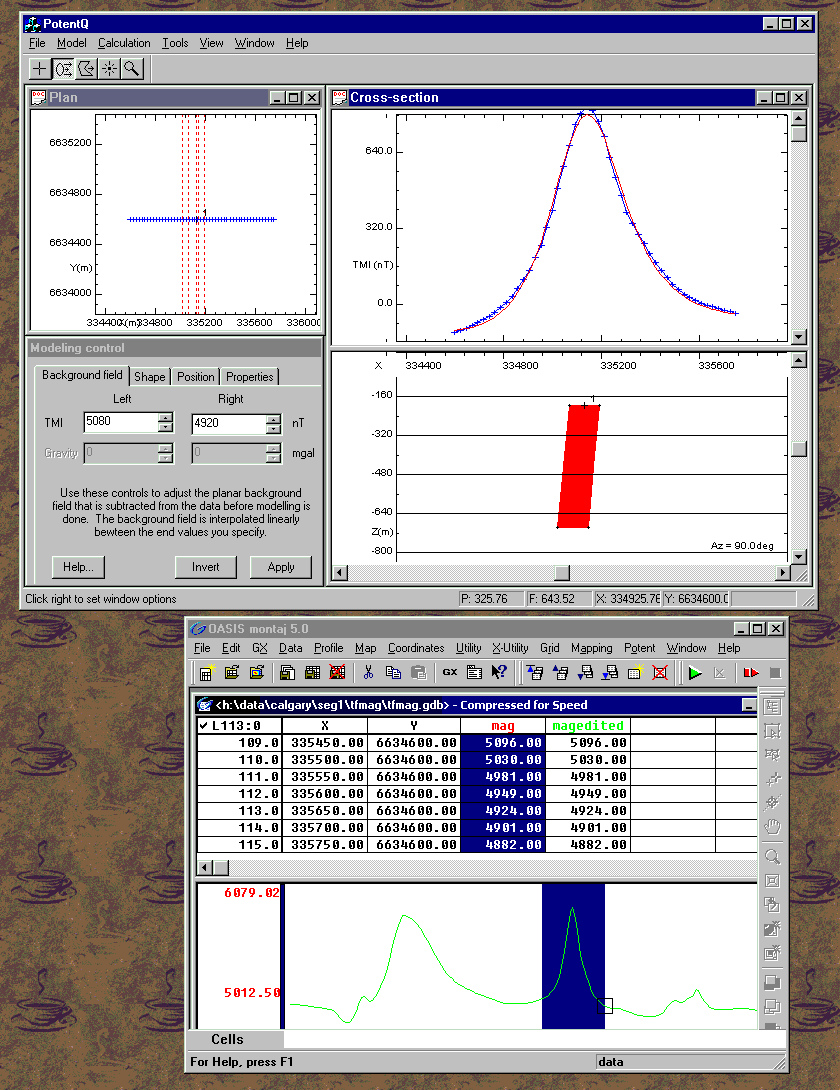
PotentQ provides rapid semi-automatic modelling of a single anomaly on a single profile or image area. Features include:
- Tight integration with Geosoft's Oasis montaj interface
- Up to three bodies, chosen from a suite of 7 geometries
- Single dataset, which may be down-hole data
- Multiple magnetic and gravity field components
- Streamlined interactive interface
- Inversion modelling requiring little user intervention
- Real-time forward modelling
- Plan and cross-section views
- Model results posted back to Oasis montaj map
A demonstration version, which uses fixed data and does not require Oasis montaj, is available on the Downloads page.
Freeware
The following programs are available free of charge. They are available from the Downloads page.
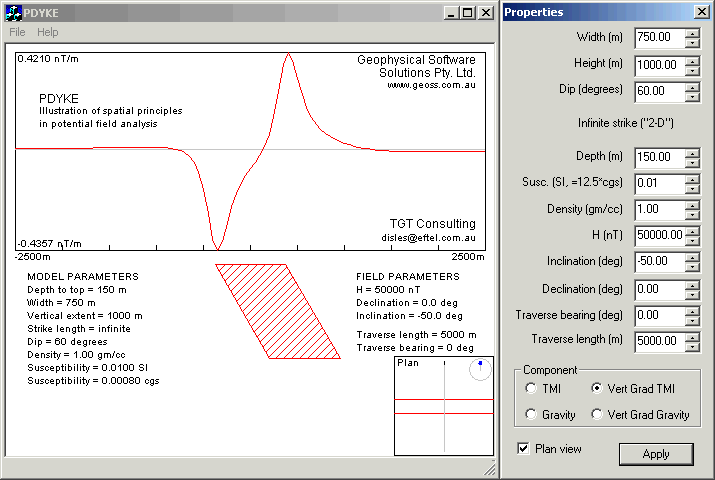
Pblock calculates the magnetic or gravitational effect of a rectangular prism. Pdyke is an enhanced version that also calculates the effect of a dipping 2-D prism.
PQaggregate - Use this stand-alone program to aggregate data from multiple PotentQ modelling runs into a single text file that can easily be imported into an Oasis montaj® database. Refer to the included PDF file for details.
Down-hole processing software - This software uses accelerometer readings to recover geographically referenced magnetic components from the measured tool-referenced components. The output file can be imported into Potent for modelling. Click here to view the User's Guide.